
Technology engulfs our lives. Whether we’d like to admit this statement or not, it’s the reality we all [society] experience as a modern norm. Notifications bombard our screens with bright red circles, rings, and texts. Hundreds of photos, messages, and tweets flood our never-ending feeds of social media content. It appears that our phones are a piece of our character. From the variety of cases, PopSockets, and custom exteriors that encase our devices, our phones express our personality and interests. Some critics would even argue that technology is engrained in the Millennial “genetic code”.
We are trapped, encapsulated by media.
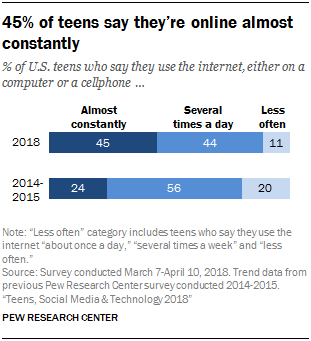
The average time spent roaming social media is about 2.5 hours per day. Further, 45% of teens say they use the internet almost constantly, which is roughly double the percentage of teens connected in 2014-2015.¹
For most, the pill is easily swallowed. Various media sources twist stories, alter headlines, and excrete their biases into our social media stories, advertisements, and videos. As the pill slowly disintegrates in our digestive track, the flexible tubing of nearly 30 feet long, its contents are exocytosed into our circulatory system. The pill’s compounds travel and bind to neuronal receptors, which trigger the longing for one’s device.
Society has made us feel obligated to check our devices. There is no choice but to look when one’s phone vibrates. This guilt of looking at our screens is referred to as “techtation”: the temptation of technology. We all fall for the devious trap. Like the childhood game, Mouse Trap, tech “giants” entrap our consumer freedoms by releasing certain editions of their devices in a timely fashion. For example, Apple releases a new phone each year with subtle changes and a new model number.
Apple and its competitors are bound to an annual smartphone update cycle (and in the case of Apple, a biannual cycle).² This cycle is adhered to by other hardware manufacturers such as Google (Pixel) and Samsung (Galaxy Note).² The result: subpar devices. So, why is Apple racing to release a new device each year?
The answer boils down to 2 things: money and the rate of purchases. “The iPhone is Apple’s cash cow” (Christina Bonnington). In its third quarter, Apple reported that it made $25 billion in revenue from iPhone sales.² By creating an annual production cycle, a new phone model gives consumers reason to upgrade even if their old phone is perfectly fine.² These minor upgrades are a critical revenue stream for the company.
Furthermore, it puts the rate of change at a comfortable pace. Many consumers may want a better phone, but not a drastically different-looking device or experience, so Apple designs an “improved” version with incremental updates (faster processor speed, wider color selection, etc.).²
Our “techtations” are exploited by the powerful “giants” behind device manufacturing. Samsung, Apple, and Huawei take the top three spots for the largest mobile companies in the world, respectively.³ Threading the needle is the trick of these “giants”. Besides appealing to the market in order to increase revenue, tech corporations face little antitrust enforcement. The Clayton Antitrust Act is more than 100 years old and arose when increasingly financial sophistication was allowing the creation of large industrial organizations. The Act defines unethical business practices such as price fixing and monopolies and upholds various rights of labor, yet there are many loopholes.
Society is trapped in the turbulent tides of technology, encased by notifications, subpar phone releases, and ancient institutional business policies.
Will we ever break our “techtations”?

 SOL: Stanzas of Life
Leave a Comment