
As a prospective physician applying to medical schools this Summer and with my academic studies in Neuroscience and Public Health, a pandemic could not be more timely.
After viewing the Netflix 6-part documentary series “Pandemic: How to Prevent an Outbreak”, it follows the stories of physicians, researchers, and public health officials on the front lines of the battle against influenza. The series showcases the steps they’re taking to stop the next global outbreak.
This stanza has no fancy title, alliteration, or rhyme, rather it highlights the influential work of a man whose actions are credited for the early instance of “social distancing”: Max Carl Starkloff. An American physician and the Health Commissioner for Saint Louis, MO (from 1895-1903 and 1911-1933), Starkloff is noted for closing all public venues and prohibiting public gatherings in October 1918 due to the Spanish flu pandemic.
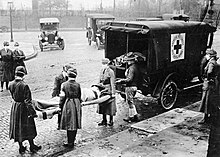
The first few days of October 1918 saw the beginning of a spiraling flu outbreak in Missouri. On October 4, Springfield, MO, had 130 cases. As the flu continued to spread in St. Louis and at Jefferson Barracks, Starkloff thought that drastic action was vital. On October 8, Starkloff was given the power to issue public health orders: closing schools, movie theaters, and banning all public gatherings of more than 20 people.
As cases spread, thousands of sick residents were treated at home by a network of volunteer nurses. As October closed its chapter, November opened its days with celebration. Armistice Day occurred on November 11, 1918. Due to the public holiday, stores were closed, but public celebration occurred outdoors to celebrate the end of World War I. With the waning of the flu pandemic in St. Louis, Starkloff relented to the gradual reopening of public places.
Public celebration proved to be premature, as there was a resurgence of the flu among the young. Schools had reopened on November 14, but by November 28, Starkloff had them closed again and had banned those under 16 years-old “from stores, including department stores, ten-cent stores, and theaters.” Influenza cases peaked on December 3rd at 1,467, and deaths peaked on the 10th at 58.
By year’s end, new cases had fallen. Starkloff ended restrictions on December 28, and schools reopened on January 2, 1919. Due to the precautions taken by Starkloff, St. Louis was able to “flatten the curve” and keep the flu epidemic from exploding as it did in Philadelphia and Boston. The peak mortality rate in St. Louis was 1/8th of Philadelphia’s death rate at its worst.
With the influx of daily news, statistics, and interviews from various media sources, it is critical that the American public stay informed on the status of this pandemic. Dr. Deborah Birx stated, “The responsibility that the press has is to really ensure that the headlines reflect the science and data that is in their piece that self.” We all need to work in union, share credible information, and stay protected. We will overcome this virus, together.
Stay healthy, Stay safe, Stay home.

 SOL: Stanzas of Life
Leave a Comment