
In the midst of a global pandemic, racial injustice has arose to claim the spotlight. After the death of George Floyd, we are witnessing an international movement over police brutality and racial targeting within our national police force.
Under the First Amendment, American citizens are protected and allowed freedom of speech, assembly, press, and the right to petition. Exercising these rights as citizens has created political tension within our current administration. The killings of George Floyd, Breonna Taylor, Ahmaud Arbery and others, have highlighted the systemic and individual racism present in the our nation’s modern era. Frustration has bubbled to the surface and resentment has been expressed by protesters around the globe.
While inequality has recently been at the forefront of newspaper articles, advertisements, and industry statements, it will continue to remain without systematic policy change and action from our nation’s leaders. As I wrote in Stanza 4: Political Powerhouse, “Politics create a sense of divide within our nation. Displayed through power and policies, elected officials have a tremendous role in shaping our laws and rights as citizens. The irony of power and democracy coincide to form a “complete” institution, riddled with biased policies and the formation of a rigid government.” In order to see change at the local level, national infrastructure must uphold and protect the rights of its people through promoting equality and ending injustice.
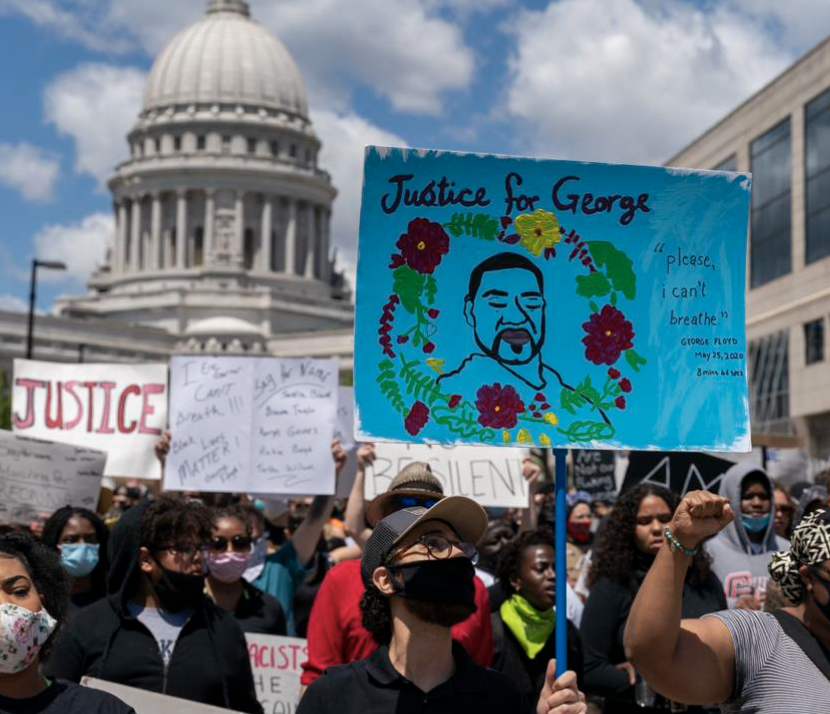
Watching the protests unfold, listening, and sharing my thoughts with colleagues on the issue of racial injustice within our police and criminal justice system, I have noticed there are two extreme behavioral reactions to inequality: silence and violence. One can choose to sit back, in a reserved manner, and continue to remain quiet. Another option is to be ignorant to what is occurring in the world. On the other side of the spectrum, actions of violence such as looting and destroying innocent businesses can be witnessed in major cities across our nation.
While it is tempting to succumb to one extreme (suppress or enrage), the middle stance is usually the most powerful in reforming policy: choosing to use one’s voice in a peaceful demonstration to enact change first at the local level and progress to the national government.
So, how do we create positive change in our current police force and rebuild trust between current officers and one’s community?
After joining my alma mater’s Zoom virtual forum and listening to the powerful stories of fellow classmates who have dealt with police in previous encounters, I felt the weight of this issue instilled in many people of color. Here are my thoughts on how we can reform our current policies:
First, we all should reach out to our local representatives and state congressmen and women. Emailing, calling, and writing personalized letters are ways to effectively respond to the current crisis.
Second, in order to reform the current police administration, increase the background checks and strengthen the licensing requirements to become an officer. Within this step, hire a competent workforce by removing all radical officers with previous violations.
Third, design a three-strike system. Just like baseball, three strikes and you’re out! Any minor violation of code/procedure is considered a strike.
At the end of the day, a majority of the men and women who serve in our communities as police officers are genuine people who put their lives on the line each day. They are heroes, protecting us and preventing crime. Unfortunately, there will always be a few bad apples in the orchard. Let’s continue to stand-up for inequality by using our voices to influence our nation’s current policies and reform the police and criminal justice system!

 SOL: Stanzas of Life
Leave a Comment